
The 37-Day Rule: What Combat Sport Athletes Need to Know About Concussion

The 37-Day Rule: What Combat Sport Athletes Need to Know About Concussion

Combat sports have a mandatory concussion protocol governing return to training and competition.

It comes from the Association of Ringside Physicians (ARP), an international body of over 100 combat sports medicine specialists whose clinical consensus on concussion management informs the return-to-competition rules enforced by athletic commissions worldwide.

The timelines it specifies are minimums, and in practice they often run longer.

Most athletes training in combat sports have never been told these figures exist. Some use the shorter end as a target. Both increase the risk of returning before full neurological recovery [7], which in turn elevates the risk of sports careers prematurely ending and potentially lifelong neurological impairment [3, 8].

Here’s what the rules actually say, where they come from, and why the minimums are floors, not targets.

For your own recovery timeline, that’s a conversation for your sports medicine doctor.


The Rule Most Martial Artists Have Never Heard Of

The ARP combat sports concussion protocol sets two mandatory stand-down periods from the date of a diagnosed concussion:

1. Minimum 37-day competition ban from the date of diagnosis

2. Minimum 30-day no-contact sparring restriction from the date of diagnosis

The keyword here is ‘Minimum’ as both periods are often extended. If symptoms persist, prior concussion history complicates recovery, or medical assessment indicates incomplete neurological recovery, both timelines extend.
 

Athletes who underreport symptoms to accelerate return put themselves at risk of exactly the outcome the protocol exists to prevent: a second concussion before full recovery, with significantly worse consequences than the first [1, 7].

The 30-day sparring restriction means no contact sparring of any kind for a minimum of one month. No “light rolling.” No “just drilling with resistance.” The 37-day competition ban means no competing for over five weeks at minimum, and only if you meet all clearance criteria.

These aren’t NZ-specific rules. They’re international consensus guidelines that apply to sanctioned combat sport competition globally. In New Zealand, Sport NZ guidelines reinforce therapy-led return timelines [4].
 
Your timeline is set by clinical assessment, not by your coach, your gym culture, or how you feel on a given day, no matter how good you feel.


Why Combat Sports Has Its Own Concussion Protocol

MMA competition data shows knockouts or technical knockouts occur in approximately 33% of matches [3].
The primary biomechanical cause of concussion is rotational acceleration: the spinning of the brain inside the skull when the head is rapidly moved by a strike.
 

It occurs independently of how hard a punch or kick appears to land: a glancing blow with enough rotational component can be concussive. In striking disciplines, that mechanism is present in virtually every exchange.

The 37-day minimum is a direct response to a population where re-exposure to that mechanism isn’t occasional, it’s inherent to the activity. For the full evidence base: Return to Sport After Concussion: Key Trends and Insights.


The 30-Day Sparring Ban: What It Means in Practice

In the meantime, your training during recovery may look something like this:

Days 1–2: Relative rest
Days 2–14 (approximately): Staged return to non-contact activity such as sub-symptom aerobic work (walking, exercycle), solo drilling, cooperative technical work without resistance. Vestibular and balance work as directed by your medical team.

Day 30+: Earliest point at which contact sparring can resume, with medical clearance
Day 37+:Earliest point at which competition can resume, with medical clearance


Priority during this window: get professional medical support early. In NZ, start with your GP after discharge, they can refer you to an ACC-covered concussion service. Your clinical team will run exercise tolerance, vestibular, and neurocognitive assessments and guide what’s appropriate for your specific injury and stage of recovery.
 

The critical phrase at every stage: with medical clearance. Clearance isn’t self-assessed, never “I feel fine.”

To be clear: 37 days isn’t the timeline for everyone. It’s the minimum, and only for athletes who are symptom-free at every stage of the graduated return-to-sport protocol, confirmed by clinical assessment to have recovered neurologically, and without complicating factors (prior concussion history, vestibular impairment, high initial symptom burden). If any of those apply, expect longer.


What Happens If You Ignore It

The short version: you’re not just risking yourself.
In sanctioned competition, competing with a concussion may be in violation of mandatory stand-down periods, and can be a regulatory breach.
 

In the gym, the consequences fall on you and the training partners you’re rolling or sparring with. For example, a training partner who doesn’t know you’re in a mandatory stand-down period is an unconsenting participant in the risk.

Clinically, the documented consequences of premature return include:
– 2–4x higher reinjury risk during the recovery period [1]
– Athletes who continue playing after a concussion are up to 11x more likely to experience prolonged recovery [7]
– In high-performing combat athletes with repeated exposure: brain atrophy (shrinkage) documented in 30.41% of boxers; among those assessed for neurological symptoms, 61.79% experienced memory loss or dementia [3]


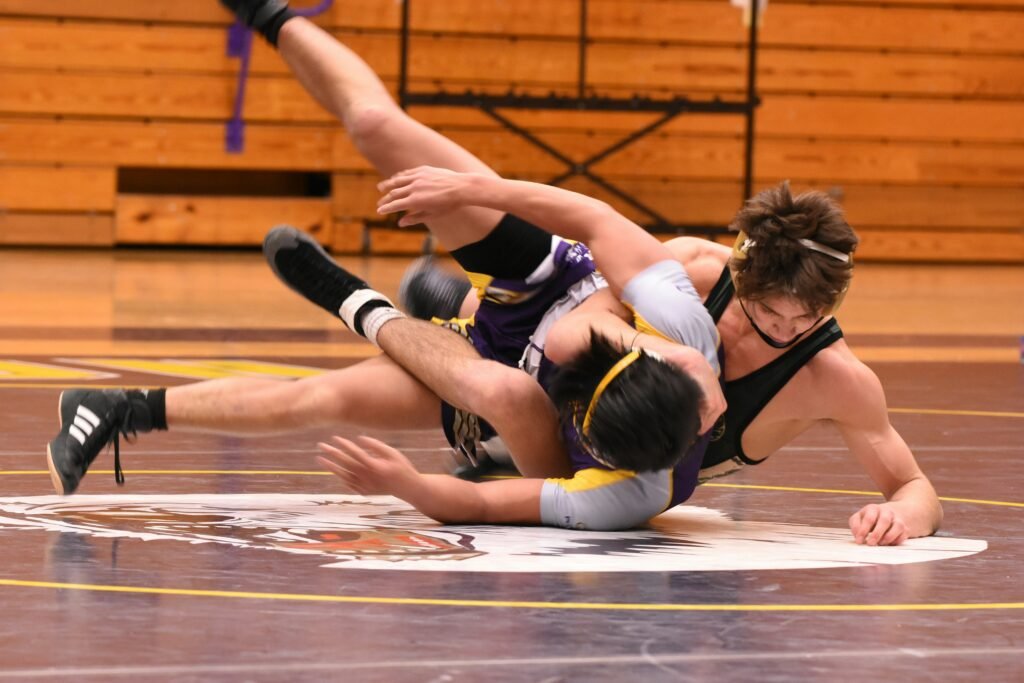
Case Study on a Competitive High School Wrestler: Cole

Cole was a high school wrestler [5]. 
 
In November 2010, he was running a drill when a teammate next to him rolled over and landed directly on his head. Cole doesn’t remember the details himself. His teammate reports that he was slow to get up from the mat, complained that his head hurt, and didn’t understand what was happening. When his mother picked him up from practice, she noticed something was wrong and took him straight to the emergency department.
 
The diagnosis: concussion. The instruction: rest, and don’t return to wrestling for about a month.
 
He went back after one week.
 
“I went to the emergency room and was told not to return to wrestling for at least a month. I ignored the doctor and returned to wrestling after one week.”
 

He didn’t tell his family where he was going. He didn’t tell his coach he wasn’t cleared. What he didn’t account for was that his coach knew what to look for. When Cole showed up on the mat acting clumsy, answering slowly, struggling with memory, the coach pulled him out.

“My neurologist believes this action by my coach saved my life.”

Cole’s outcome: months of ongoing recovery and a likely permanent end to his wrestling career. 

“This was certainly one of the worse decisions I have made. It’s been several months and I’m still recovering. But I will probably never be able to wrestle again just because I wanted to get back to practice.”

The statistics above describe what happens at the population level. Cole is what it looks like for one person.


Conclusion 

The 37 days exists because combat sports don’t give you the option of avoiding re-exposure. The protocol is built around that reality.

Know the rule and follow the timeline. See a sports physio, sports medicine doctor, or GP who knows concussion management, not just for final clearance but for regular check-ins throughout recovery.

Self-management without clinical oversight is how combat athletes end up in the category that gives the 37-day rule its reason for existing.

If you’re a combat sport athlete navigating a concussion and want structured support during the return-to-sport window, get in touch.

Frequently Asked Questions

The 37-day rule is the minimum competition ban following a diagnosed concussion, as established by the Association of Ringside Physicians (ARP). It means no competing for at least five weeks, and only with full medical clearance.
The minimum no-contact sparring restriction under ARP guidelines is 30 days from the date of diagnosis. Contact sparring can only resume with medical clearance, after you are symptom-free at every stage of the graduated return-to-sport protocol.
Yes. The stand-down bans contact sparring and competition, not all training. A staged return to non-contact activity typically begins within the first two weeks: sub-symptom aerobic work, solo drilling, and cooperative technical work without resistance. Full contact and competition resume only after medical clearance at the appropriate stages.
Yes. The ARP guidelines apply across sanctioned combat sports, including BJJ, MMA, boxing, Muay Thai, and wrestling. Grappling sports are included, the stand-down covers any combat sport where re-exposure to the concussive mechanism is inherent to the activity.
The ARP sets the clinical consensus; enforcement sits with regional and national athletic commissions worldwide. In New Zealand, Sport NZ guidelines reinforce therapy-led return timelines.

References

1. Bernick C, et al. Association of Ringside Physicians consensus statement on concussion management in combat sports. British Journal of Sports Medicine. 2018. PubMed

2. DJSIR Victoria: Combat Sports Contestant Safety: Non-Fight Periods and Return to Fight Strategy. 

3. Jayarao M, et al. Traumatic brain injury risk in combat sports: Systematic review and meta-analysis. British Journal of Sports Medicine. 2023. PubMed

4. Sport New Zealand: Return to Sport After Concussion. lfbit.co.nz

5. CDC Heads Up: Returning to Sports After a Concussion. cdc.gov
6. Echemendia RJ, et al. 6th International Conference on Concussion in Sport consensus statement. British Journal of Sports Medicine. 2023. PubMed